(604) 238-6666
(604) 238-6666
When a wisdom tooth is stuck (impacted), infected, decaying or pushing on the tooth next to it, removing it is usually the simplest fix.
Quick answer: Wisdom teeth are the third molars at the very back of your mouth. They usually come in between ages 17 and 26, and they may not have enough room to grow in properly. When a wisdom tooth is stuck (impacted), infected, decaying or pushing on the tooth next to it, removing it is usually the simplest fix. If it's healthy, fully erupted and easy to clean, it may be fine to leave it and keep an eye on it. At DTC Dental Treatment Center in Richmond, BC, most wisdom teeth are removed in-house under local anesthetic, with oral sedation available for nervous patients.
Most adults have 32 permanent teeth, and wisdom teeth are the last four to arrive: one in each corner at the back of the mouth. According to the Mayo Clinic, they "usually emerge sometime between the ages of 17 and 26."
Some people get all four with no trouble. Many don't. By the time these molars start moving, the jaw is often already full, so the tooth gets stuck under the gum, in the bone, or at an angle against the neighbouring molar. The American Academy of Oral and Maxillofacial Surgeons reports that 90% of people have at least one impacted wisdom tooth.
Dentists describe an impacted tooth by how deep it sits and which way it's pointing. Both affect how straightforward the removal will be.
By depth
By angle
An impacted wisdom tooth can be completely silent for years. When it does cause trouble, the Mayo Clinic lists these common symptoms:
If your gums hurt in one spot behind your last molar, or you've noticed jaw tightness on one side, a partly erupted wisdom tooth is a common cause. A dental checkup with x-rays is the fastest way to find out.
Not every wisdom tooth has to come out. The trouble starts when one is impacted or hard to clean. Here are the complications:
You may have heard that wisdom teeth cause crowding of the front teeth. The evidence on this is mixed, so it usually isn't a reason on its own to remove them.
This is a fair question, and the research doesn't give a clear yes or no. A 2020 Cochrane review looked at impacted wisdom teeth that weren't causing symptoms or disease and found there was not enough evidence to say whether they should be removed or kept. The reviewers suggest the decision be made together by the patient and dentist, and that anyone who keeps their wisdom teeth have them checked regularly.
That's how we approach it at DTC Dental. If your wisdom teeth are healthy and easy to keep clean, we'll tell you so and track them at your regular checkups. If they're causing problems, or the x-rays show they're likely to, we'll explain why we'd recommend taking them out.
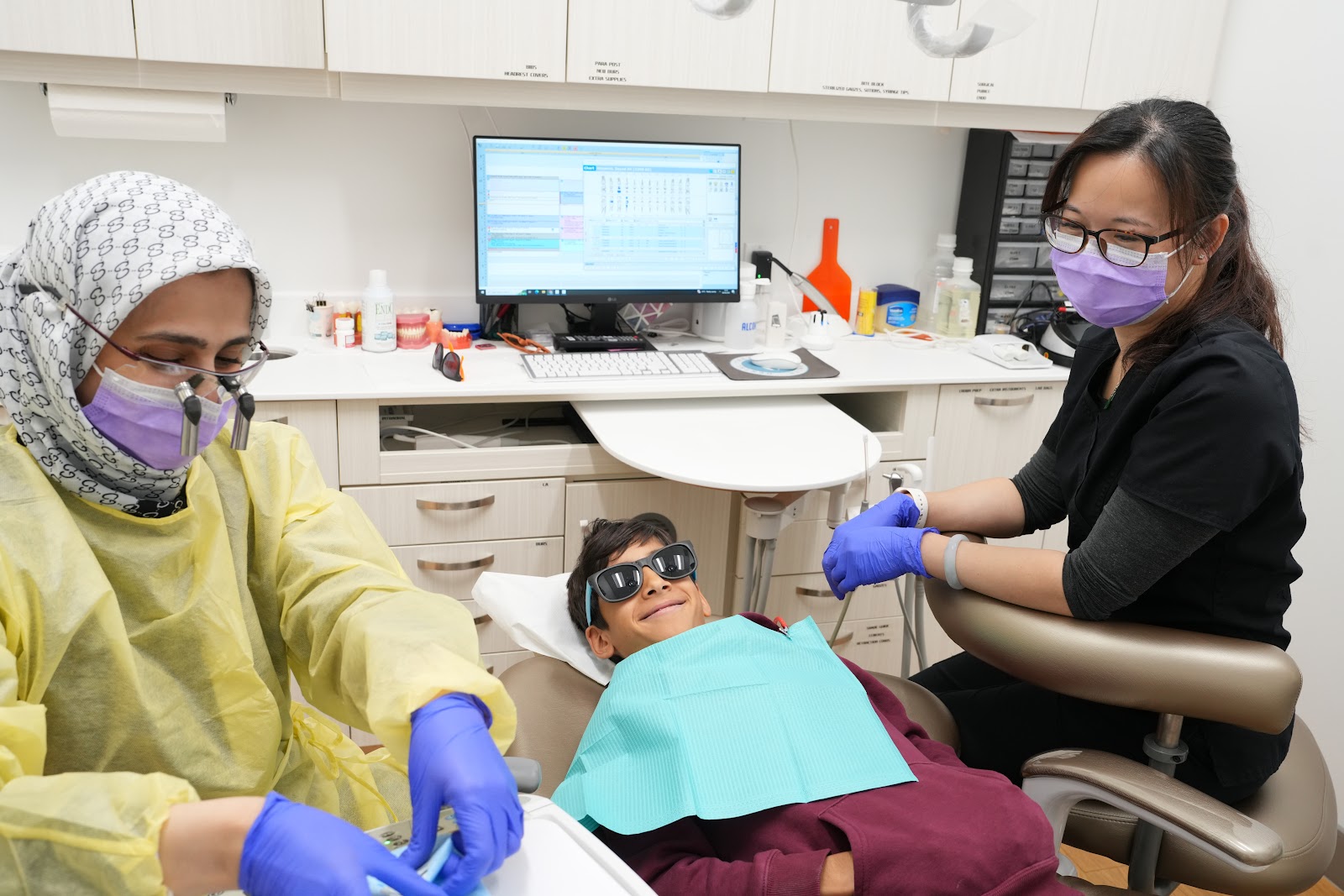
Here's what a typical visit at our Richmond dental clinic looks like.
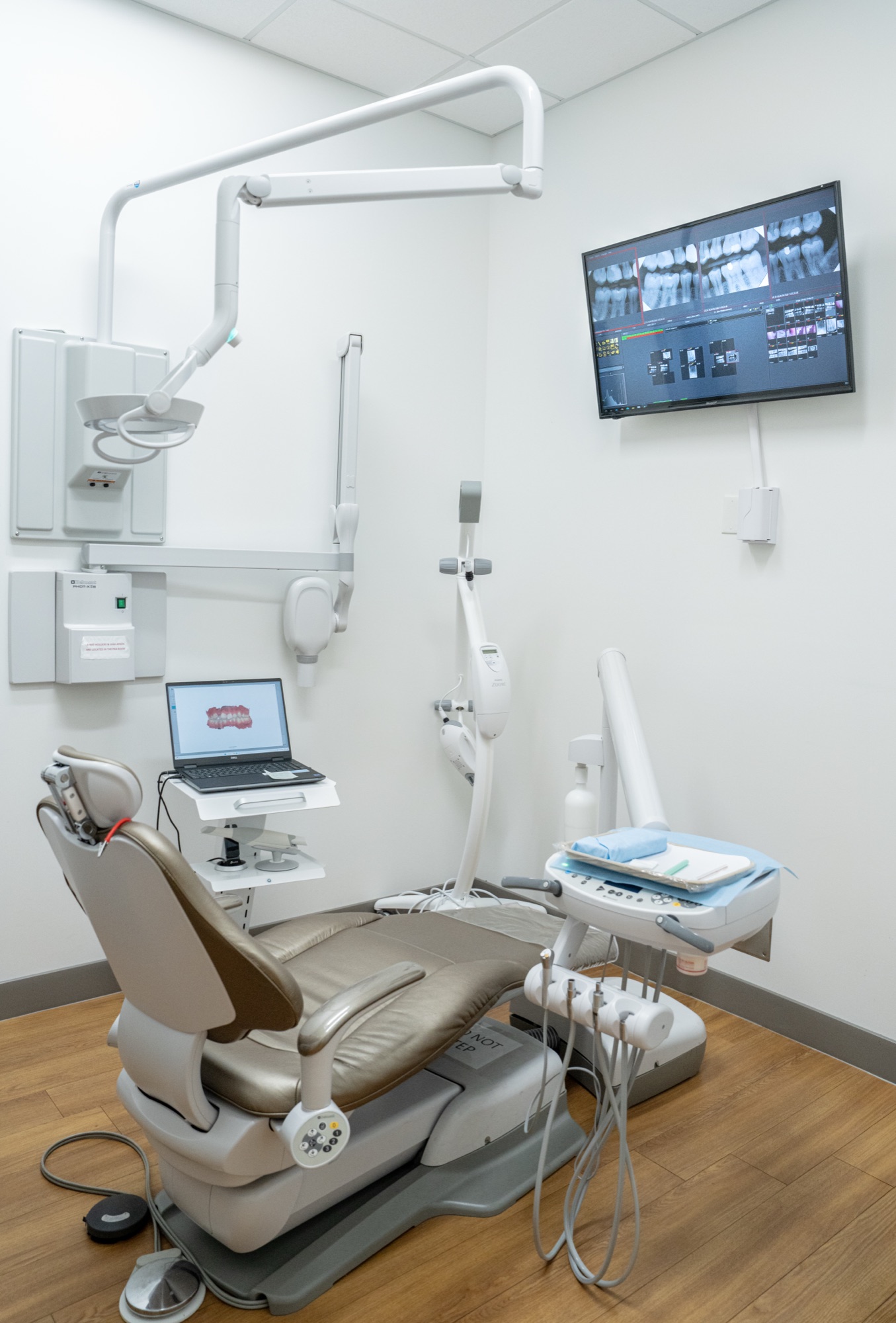
1. Exam and x-rays. We start with an exam and low-radiation digital x-rays to see how each tooth is positioned and how close the roots sit to the nerve in your lower jaw and to your sinuses. This tells us whether the tooth can come out in one piece or needs to be sectioned into smaller pieces. For lower wisdom teeth that sit very close to the nerve, a 3D scan such as a cone beam CT (CBCT) can give a more exact picture of the risk. A CT scan may be used when x-rays suggest a higher risk of nerve injury.
2. A written estimate. Once we've seen the x-rays, you get a written fee estimate before you commit to anything.
3. Numbing. The area is fully numbed with local anesthetic. You'll feel pressure during the extraction, but you shouldn't feel sharp pain.
4. Removal. A single wisdom tooth usually takes 20 to 40 minutes. In many cases all four can be removed in the same appointment.
5. Aftercare instructions. You go home the same day with written instructions and a way to reach us if something doesn't feel right.
Most patients don't need a referral to an oral surgeon. At DTC Dental:
If the idea of having a tooth pulled makes you anxious, you're not alone, and you don't have to push through it. We pace the appointment around you and explain each step before we do it.
For patients who need more help, we have oral sedation. You take a prescribed medication before the appointment that makes you feel relaxed and sleepy, and many people don't remember much of the visit afterward. If you choose sedation:

The cost of teeth removal depends on things we can only confirm once we've seen your x-rays: how many teeth are coming out, whether they've erupted or are impacted, how deep they sit, and whether sedation is used. A fully erupted upper wisdom tooth costs less to remove than a lower one lying sideways in the bone.
At DTC Dental:
The CDCP covers oral surgery, including "removal of teeth and roots," and oral surgery does not need preauthorization. How much the plan pays depends on your adjusted family net income, so some patients have a co-payment and some don't. We can check your coverage before your appointment.
Most people feel noticeably better by day three or four, and fully recover in one to two weeks. Swelling and tenderness usually build over the first two to three days and then settle. Many of our patients go back to work or school the next day.
What helps
What to avoid
The most common problem after an extraction is dry socket. It happens when the blood clot in the socket comes loose too early and leaves the bone exposed. The usual sign is pain that gets worse a few days after the extraction instead of better. Call us if that happens, or if you get a fever. Dry socket is treatable, and relief usually comes quickly once the socket is cleaned and dressed.
The extraction itself shouldn't hurt, because the area is fully numbed. You'll feel pressure and movement, which is normal. Some soreness and swelling afterward is expected for a few days and is usually managed with over-the-counter pain relief.
One wisdom tooth usually takes 20 to 40 minutes. Impacted teeth that need to be sectioned take longer than teeth that have fully come in.
Often, yes. Many patients have all four removed in one appointment, which means one recovery period instead of several.
Most people feel much better within three or four days and are fully healed in one to two weeks
Not usually. Most wisdom teeth, including many impacted ones, can be removed at DTC Dental. We'll refer you if your case needs a specialist or IV sedation.
The CDCP covers the removal of teeth and roots as an oral surgery service, and no preauthorization is needed.
Stick to soft, cool foods for the first several days: yogurt, scrambled eggs, mashed potatoes, pasta and lukewarm soup. Avoid anything crunchy, spicy or full of small seeds, and don't use a straw.
No. Healthy wisdom teeth that have come in fully and are easy to clean can often stay. Research on removing symptom-free impacted wisdom teeth is inconclusive, so we'll look at your x-rays and talk through the options with you.
We keep time for same-day emergency visits when we can, though we can't guarantee a spot. Call (604) 238-6666 as early in the day as possible.
If a wisdom tooth is bothering you, or you'd just like to know whether yours will cause problems down the road, we can take a look. Our team speaks English, Mandarin, Cantonese and Farsi, so you can ask your questions in the language you're most comfortable with.
DTC Dental Treatment Center 6011 No. 1 Rd, Unit 120, Richmond, BC V7C 0G5 Phone: (604) 238-6666
Hours: Tuesday 10 am to 6 pm · Wednesday and Thursday 9 am to 5 pm · Friday 9 am to 6 pm · Saturday 10 am to 4 pm · Closed Sunday, Monday and statutory holidays
Book an appointment or learn more about wisdom teeth extractions at DTC Dental.

Key Takeaways

The American Academy of Oral and Maxillofacial Surgeons reports that 90% of people have at least one impacted wisdom tooth.
When a wisdom tooth is stuck (impacted), infected, decaying or pushing on the tooth next to it, removing it is usually the simplest fix.
Most patients don't need a referral to an oral surgeon.
Our fees follow the BC Dental Association (BCDA) fee guide, with no markup.
Most people feel noticeably better by day three or four, and fully recover in one to two weeks.

Tips: Choose the right formula: fluoride for cavity protection, antibacterial for gum health, or alcohol-free for a sensitive mouth.
FAQ



DTC Dental Treatment Center, a family dental clinic in Richmond, BC (“DTC” stands for Dental Treatment Center). CDCP accepted · English · 中文 · فارسی